.webp?w=200&h=80)

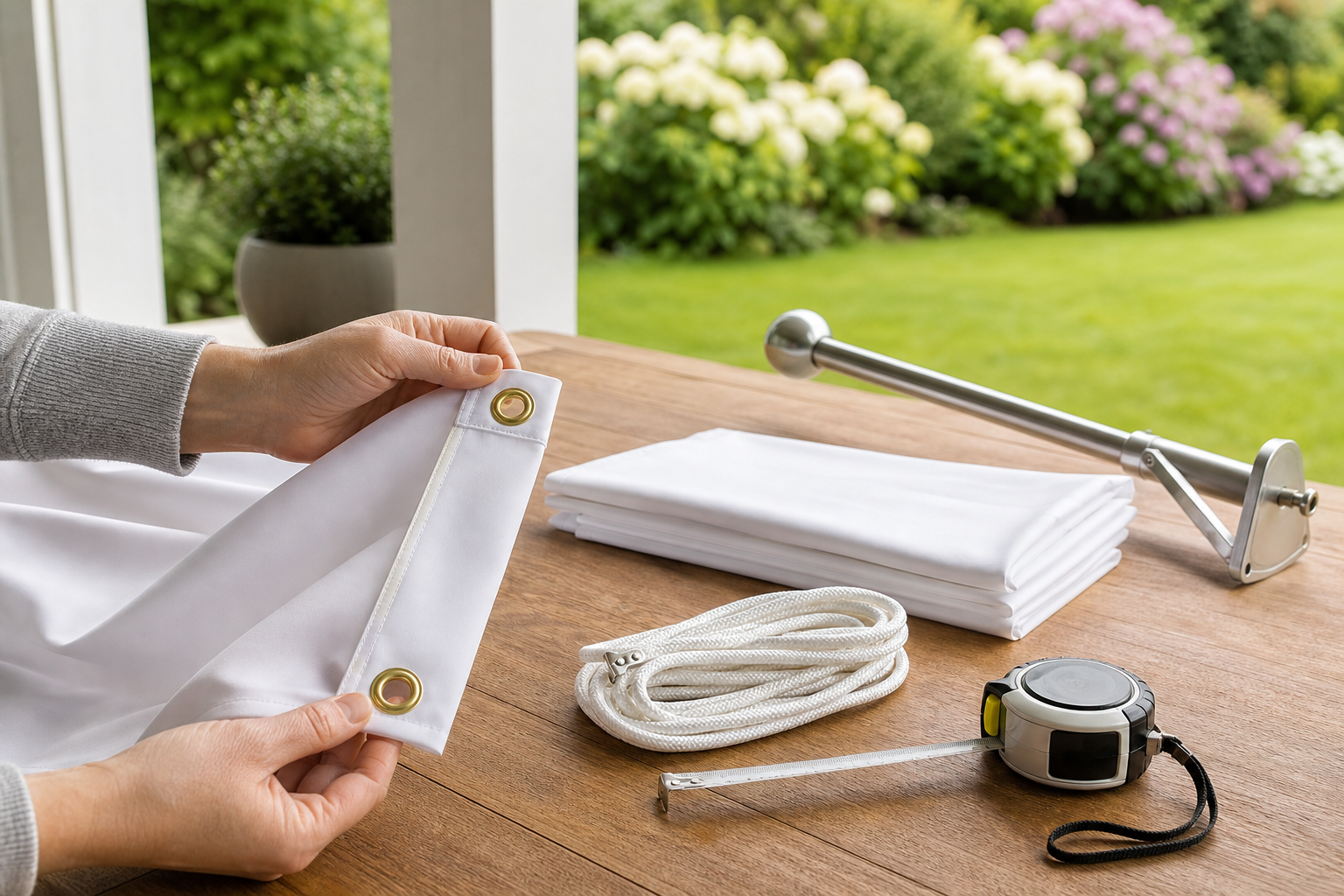
The short answer: a 60 x 90 cm flag (about 24 x 35 inches) is a practical compact size for a wall, balcony, event backdrop, or modest residential pole when the available space and hardware match it. Before ordering, measure the display area, confirm the flag's orientation and grommet edge, check that the mount and fasteners are suitable for the location, and plan to bring the flag in during conditions your hardware or the product instructions are not rated to handle. For official or ceremonial use, always follow the issuing country's current protocol rather than assuming one country's rules apply to another.
Globe Flags lists many polyester national flags in this format, including the India flag, Albania flag, Norway flag, Greece flag, and Guyana flag. The live product page should remain your source for the exact size, material, attachment details, colors, and availability of the flag you select.
60 x 90 cm flag planning table
| Question | What to check | Why it matters |
|---|---|---|
| Will it fit? | Measure width, drop, nearby walls, railings, plants and doors | The flag needs clearance to hang or move without snagging |
| How will it attach? | Count and inspect grommets; match clips, rings or ties to the mount | Incompatible hardware can load the fabric unevenly |
| Indoor or outdoor? | Confirm the listing and choose a location appropriate to the fabric and hardware | Sun, moisture, wind and abrasion change care needs |
| Is protocol involved? | Check the issuing government's official guidance for order, position, mourning and disposal | Rules and customs differ by country and setting |
| How will it be stored? | Plan a clean, dry, dark place with room to fold or roll loosely | Storage affects creasing, fading, moisture and abrasion |
1. Measure the display space, not just the pole
Use a tape to mark a 90 cm horizontal span and a 60 cm drop in the actual location. Then check the full path the fabric could occupy if it hangs diagonally or moves in a breeze. Keep it away from sharp masonry, rough railings, gutters, branches, lamps, doors and hot fixtures. A balcony can look wide enough from inside while offering little safe clearance outside its railing.
For a wall display, decide whether the 90 cm side will run horizontally and whether the design has a defined top. Do not rotate a national flag merely to fit a space unless the issuing authority recognizes that orientation. For a freestanding or angled pole, measure the usable attachment distance between the two clips or rings rather than relying on the pole's total length.
2. Match the grommets to compatible hardware
The current Globe Flags listings describe brass grommets on these 60 x 90 cm polyester flags. Inspect the live photos and description for the selected item, because construction can differ across products. A grommet is the reinforced metal opening at the hoist edge; it still needs a compatible clip, ring, tie, or fastener. The mount—not the fabric—should carry structural loads.
- Check that the bracket or pole is firmly installed according to its manufacturer's instructions.
- Use smooth, correctly sized clips or ties that close fully and do not cut into the grommet.
- Attach both points without twisting the hoist edge.
- Leave enough freedom for the fabric to hang naturally, but not so much slack that it strikes nearby surfaces.
- After the first display, look for loose hardware, sharp edges, stretched stitching or abrasion.
Do not improvise a high exterior installation from an unstable ladder. If the bracket is elevated, near electrical service, or exposed to strong wind, use a qualified installer and locally appropriate hardware.
3. Choose indoor or outdoor placement deliberately
Polyester is widely used for flags, but a material name alone does not establish a universal wind rating, UV lifespan, waterproof guarantee or fade-proof performance. Follow the selected listing and mounting-system instructions. Outdoor exposure is cumulative: sunlight can alter dyes, repeated wetting and drying can affect fabric, and a free edge that repeatedly strikes a wall or railing can fray.
Before each outdoor display, check the forecast and the condition of the pole, bracket, clips, grommets and seams. Take the flag down if conditions exceed the mount manufacturer's limits or if the flag cannot move without hitting an obstruction. After rain or dew, allow it to dry fully in a clean, ventilated place before storage. Never pack damp fabric into a closed container.
Indoors, keep the flag away from candles, heaters, cooking areas, strong spotlights and high-traffic corners. For a temporary event backdrop, secure it without puncturing the printed field and route cords or stands so they are not a trip hazard.
4. Treat flag protocol as country-specific
Official guidance can govern which way a flag is displayed, its position beside other flags, precedence, half-masting, respectful handling and disposal. These details are not interchangeable. For example, the Government of Canada's rules for displaying the National Flag of Canada describe precedence and positioning in Canadian contexts; they are not a substitute for the official rules of India, Albania, Norway, Greece, Guyana, or any other country.
If your display is for a government office, school, diplomatic event, memorial, parade or formal ceremony, consult the relevant national authority and the venue before installation. For a group of flags, confirm each current design and official proportion. Avoid adding logos, writing, pins or decorations unless authoritative guidance clearly permits it.
5. Clean conservatively and store completely dry
Start with any care instructions on the product page or label. If none are provided, do not assume that hot water, bleach, stain remover, a dryer, iron or dry cleaning is safe for the printed fabric, stitching and grommets. Test nothing on a visible symbolic area. For dust, gentle low-suction cleaning through a protective screen may be more appropriate than aggressive rubbing, but valuable, historic or ceremonial flags should be assessed by a textile conservator.
The Canadian Conservation Institute advises keeping textiles clean, supporting them adequately, and limiting light, moisture, pests and unnecessary handling. For an everyday modern flag, handle it with clean, dry hands, remove surface debris gently, and make sure it is fully dry before folding. Store it in a clean, dry, dark location away from basement moisture, attic heat, pests and direct contact with rough or acidic materials. Refold occasionally along different lines if long-term creasing is a concern.
A quick pre-display checklist
- The selected flag's current page confirms the size, material and attachment style.
- The display zone provides clearance for the full 60 x 90 cm fabric.
- The bracket, pole and fasteners are appropriate and securely installed.
- The grommets, stitching and edges show no damage.
- The weather and exposure suit the product and hardware instructions.
- Country-specific protocol has been checked for any formal display.
- A clean, dry storage place is ready before the flag comes down.
Frequently asked questions
Is 60 x 90 cm the same as 2 x 3 feet?
It is close, but not identical. Sixty by ninety centimetres is about 23.6 by 35.4 inches, while two by three feet is 24 by 36 inches. Measure the actual display and use the dimensions on the live listing.
Can I leave a polyester flag outside all year?
Do not infer year-round suitability from polyester alone. Exposure, climate, pole hardware, abrasion and the product's construction all matter. Follow the current listing and mount instructions, inspect frequently, and bring it in when conditions are unsuitable.
Which side do the grommets go on?
They are normally on the hoist edge that attaches to the pole or mount. Confirm the design's correct orientation and the product photos before installation rather than rotating it to make the hardware convenient.
Can several national flags be displayed at different heights?
Precedence and height rules depend on the countries, jurisdiction and setting. For a formal multi-flag display, consult the applicable government protocol office or official guidance for every represented flag.
How do I remove wrinkles?
Use only the product's care directions. Heat can damage synthetic fabric or printed finishes. Hanging the flag indoors with proper support may allow minor creases to relax; do not apply an iron, steamer or dryer unless the care instructions permit it.
Bottom line
A good 60 x 90 cm flag setup begins with three matches: the fabric must fit the space, the grommets must fit the hardware, and the display method must fit the occasion's official protocol. Measure first, avoid unsupported performance claims, inspect before exposure, and store the flag clean and fully dry.